
Start with backing that suits a stretchy knit
Cut-away backing is a common choice for stretchy knit garments because it remains with the embroidery and supports it after stitching. Madeira lists sweatshirts among its cut-away uses. The design file, garment, and product instructions determine the weight and number of layers.
Do not use the garment's thickness by itself to choose backing. A dense design and a lightly stitched logo put different demands on the fabric. Madeira's cut-away guide explains the role of permanent backing on knits and sweatshirts.
Compare two cut-away options
These New brothread rolls are different weights and constructions. Use the manufacturer's product directions to decide whether either fits your sweatshirt and design.
EmbroiderySetup is free and has no ads. If you buy through our Amazon links, you pay the same price and we earn a small cut, which helps keep the guides coming. As an Amazon Associate we earn from qualifying purchases.
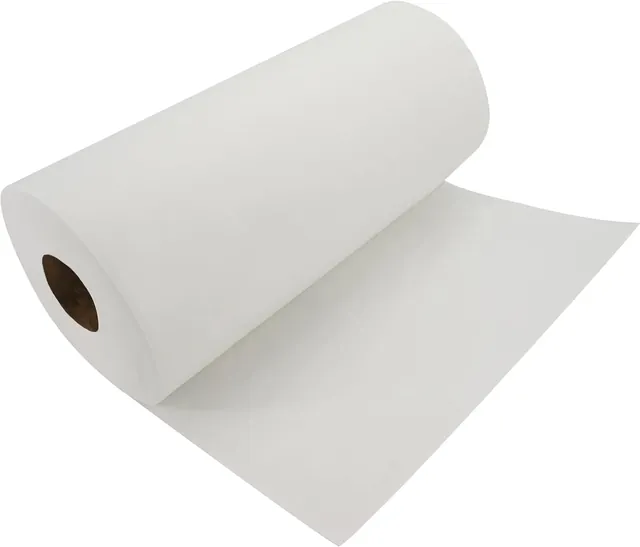
Medium cut-away
New brothread Cut Away, 2.5 oz, 12 in × 50 yd
New brothread describes this permanent cut-away as a medium-weight backing for light-to-medium stitch density. Its product guidance says denser designs may need more than one layer.
Follow the design file and stabilizer package for the layer count.
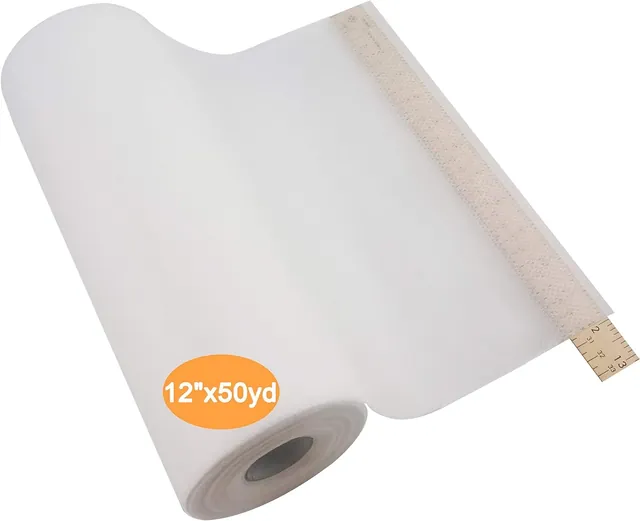
Low-profile mesh
New brothread No Show Mesh, 1.8 oz, 12 in × 50 yd
New brothread describes this as permanent cut-away for light-colored stretchy knits. Its guidance says thicker fabrics or denser designs may need a light tear-away layer underneath.
This is not the same support choice as a medium cut-away roll.
For comparison, Madeira describes low-profile performance backings for lightweight or delicate knits. Its performance backing guide also emphasizes choosing support for the fabric and design.
Add topping when fleece texture can hide stitches
High-pile fleece can push stitches down into the surface. Madeira says water-soluble topping helps hold the pile down so the stitching stays visible. Topping sits above the fabric; it does not replace backing.
A smooth, low-pile sweatshirt may not need a surface layer. For small lettering or textured fleece, check the design instructions and the topping package for application and removal directions. See Madeira's water-soluble topping guide.
Do not force a hoop over a bulky seam
If a pocket, zipper, or seam keeps the hoop from sitting flat, stop and check the machine manual for a supported floating or basting method. The stabilizer still needs to hold the garment and design without stretching the fabric out of shape. For temporary ways to hold an item that will not sit flat in the hoop, see the guide to floating embroidery.
Common questions about sweatshirt embroidery
Does a sweatshirt always need cut-away backing?
Cut-away is a common choice for stretchy knits because it stays with the garment and provides continued support. Follow the design and stabilizer instructions for the material and layer count.
When should I use topping on fleece?
Use water-soluble topping when fleece pile could cover stitches or small details. Madeira says topping holds down high-pile fabric; it does not replace backing.
Is no-show mesh suitable for a heavy hoodie?
New brothread describes its no-show mesh for light-colored stretchy knits and says thicker fabric or denser designs may need added support. Check the exact design and package guidance.